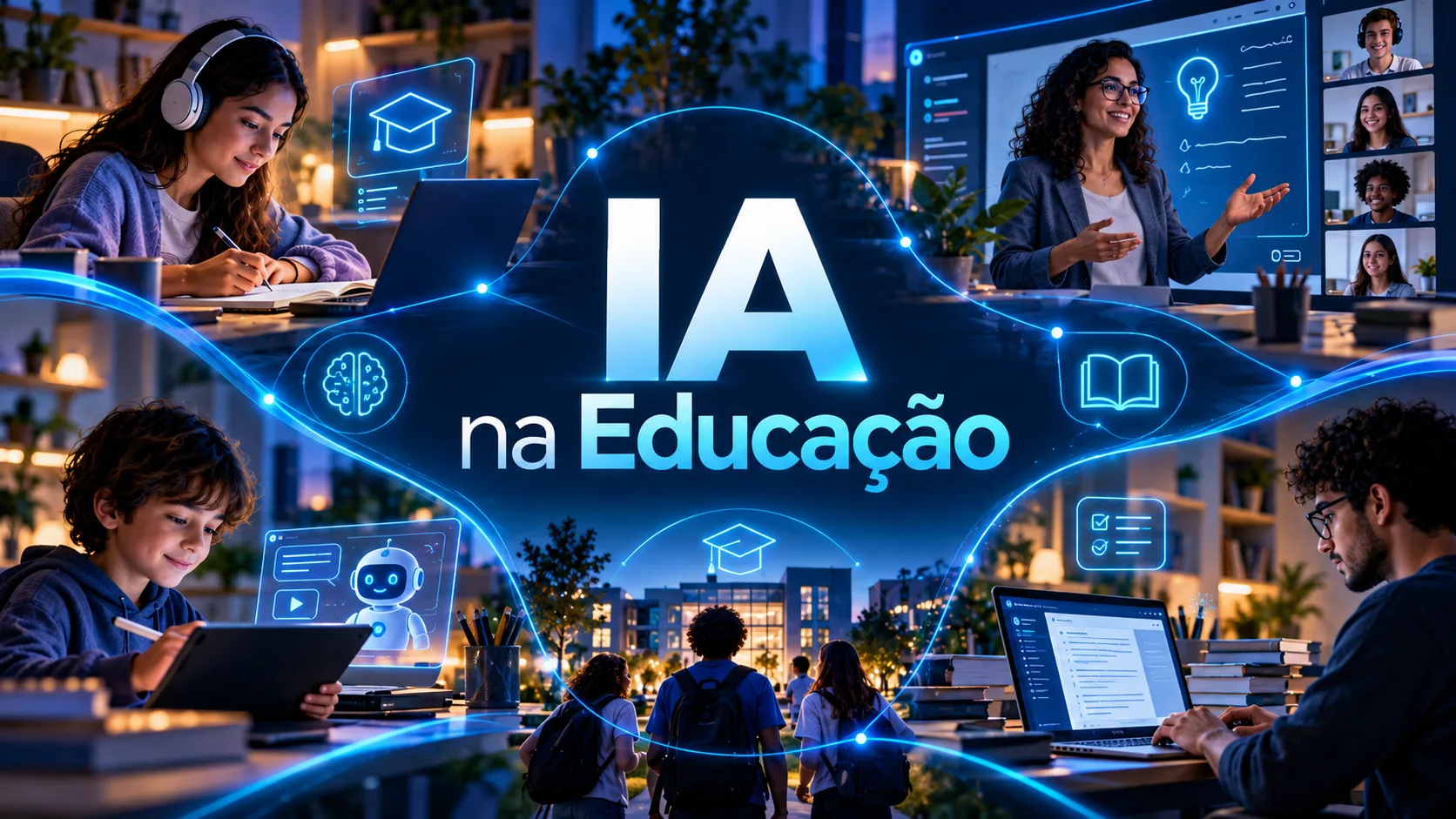

For Brazilian basic education in 2026, the Ministry of Education (MEC) recommends teaching students how artificial intelligence works and using AI tools only when they serve a teaching purpose, remain under educator oversight, and protect students. Guidance varies by age: early childhood education prioritizes screen-free activities; the first years of primary school focus on concepts; later primary and secondary levels allow more guided use and critical analysis. This is neither a blanket authorization nor a federal statutory ban on every form of AI in schools.
What Brazil’s MEC published in March and April 2026
In March, the Ministry’s Secretariat for Information Management, Innovation and Educational Policy Evaluation (Segape/MEC) released its Framework for the Responsible Development and Use of Artificial Intelligence in Education, covering different education levels. It addresses teachers’ central role, inclusion, data protection, authorship, errors and algorithmic bias. It is guidance, not legislation that automatically bans or authorizes individual applications.
On April 8, the Ministry presented Artificial Intelligence in Basic Education: A Guidance Document on Curricular Approaches and Ethical AI Practices in Schools. Focused on education authorities, administrators and schools, it discusses seven curricular guidelines, twelve learning outcomes, and four areas of teacher training. This article relies on a consulted textual reproduction of that document, official announcements and specialist reporting; no AI service was tested, and no school deployment was evaluated.
The key distinction is learning about AI versus learning with AI. The first involves understanding data, algorithms, recommendations and errors, even without opening a chatbot. The second involves using an AI tool in the learning activity. That choice calls for evidence that the tool helps learning and that the school can use it safely.
How the recommendations change by school stage
| Stage | Educational direction in the documents | Boundary or precaution |
|---|---|---|
| Early childhood education | Play, sorting, sequences and pattern recognition with physical materials, without depending on screens. | The March framework discourages direct AI use by young children, with room for inclusion and accessibility needs assessed by educators. |
| Primary school, grades 1–5 | Logical reasoning, step-by-step instructions, and finding and selecting information with teacher guidance. | Avoid independent chatbot use and unnecessary screen exposure; any technology should be occasional and supervised. |
| Primary school, grades 6–9 | Understand algorithms and critically examine AI-generated texts, images and information. | Using AI for support must preserve authorship, intellectual effort and source verification. |
| Upper secondary education (Ensino Médio) | Investigate AI systems, bias, and social, economic and environmental effects through guided projects. | Teachers should define objectives, assessment rules and boundaries rather than outsource learning to ready-made answers. |
These stages describe educational priorities and age-related progression. They do not give every secondary student unrestricted access to any platform, nor do they imply that discussing AI with a young child requires a device. Curriculum planning also draws on Brazil’s National Common Curricular Base (BNCC) and digital and media education.
How teachers can use AI without surrendering responsibility
- Lesson preparation and materials: use AI to organize ideas, suggest exercise variations or produce an initial draft, then check facts, suitability, representation and curriculum alignment before teaching.
- Classroom inquiry: show an AI-generated response and ask students to identify mistakes, compare sources and explain their own arguments. This is a suggested activity, not one tested by this publication.
- Accessibility: assess reading, transcription and content adaptation aids while checking quality, alternative formats and exposure of student information.
- Assessment: do not let a system single-handedly determine consequential grades or students’ educational paths; interpretation and decisions must remain human.
- School policy: document approved tools, permitted tasks, how AI assistance should be disclosed, and responsibility for errors, privacy and complaints.
The documents do not suggest that productivity alone justifies adoption. Schools must consider their educational plans, staff preparation, answer quality and non-digital alternatives. A system capable of producing polished material can also invent references, reproduce prejudice or conceal mistakes.
What students and families should know
For students, requesting examples, exploring a difficult concept or comparing explanations with AI can fit an authorized assignment. Submitting generated writing or a completed solution as entirely one’s own does not demonstrate the required learning. Teachers and schools should communicate the specific rules for disclosure, assessment and tool use in age-appropriate ways.
Families can ask which applications have been approved, whether minors must create accounts, what data are collected, whether the service uses submissions for model training, and how mistakes may be challenged or corrected. Students should not enter full names, grades, medical reports, photographs or classmates’ information into an unauthorized chatbot. Data safeguards also follow applicable law, notably Brazil’s General Data Protection Law (LGPD) and the Digital Statute of Children and Adolescents (ECA Digital), rather than pedagogical advice alone.
Federal guidance, local rules and a CNE opinion are different things
The March framework and April curriculum document guide decisions. In-force legislation on personal information and children’s rights creates separate binding duties. States, municipalities and schools may issue more detailed protocols. Bahia, for instance, published guidelines for its own state school system in February 2026; that does not turn the same document into a nationwide rule.
A later rulemaking step must also be distinguished from the two guides: Brazil’s National Education Council (CNE) approved Opinion CNE/CP No. 15/2026 on September 1, 2026, and a summary was published on October 6. A legal analysis dated October 14 reported that it was still awaiting MEC approval to acquire normative force. Its proposed restrictions, including those on independent use by young children, should therefore not be presented as a federal resolution already in effect without checking subsequent official action.
Checklist before introducing an AI tool at school
- Identify the school stage and specify the learning outcome the tool should support.
- Check the education authority’s rules, the school’s rules, the assignment’s conditions and the service’s age and account requirements.
- Assess privacy, lawful grounds for data processing, vendors, data retention, discrimination risks and accessible alternatives.
- Decide what teachers will oversee, what students must produce, and how they will explain any AI assistance.
- Critically evaluate educational quality before institutional adoption and reconsider the decision if errors or learning harms emerge.
The practical message for 2026 is not to choose between allowing all AI and banning all AI. It is to teach about the technology progressively, use tools for defined purposes and safeguard authorship, autonomy, inclusion and data. Whether a particular use is allowed depends on the relevant school-system rules and the individual assignment.
Sources and references
- MEC/Secom: March and April 2026 announcement timeline
- MEC April 2026 guidance, consulted textual reproduction
- Jeduca: reporting on the nonbinding MEC framework
- Fundação Itaú: framework recommendations by school stage
- Bahia State Education Secretariat: state-school guidance
- CNE/CP Opinion 15/2026: October legal status analysis
- Brazilian Presidency: General Data Protection Law
- Brazilian Presidency: ECA Digital, Law 15,211/2025